

Emergency Gear Replacement Services
Replacement Gears for Industrial Applications
We can replace failed, worn, or discontinued gears from samples, drawings, or models. Reverse engineering is available when no data exists, with expedited manufacturing for critical equipment.
Send your part details, photos, or drawings for review.
Common Emergency Gear Replacement Scenarios
- Broken or fractured gear teeth
- Worn or pitted gear surfaces
- Gearbox failure requiring replacement
- Obsolete or discontinued components
- No drawings or missing part data
Request Support
Please fill out the form below or contact us at
(810) 643-2480
[email protected]
Manufacturing Capabilities, Support and Processes
Review equipment, materials, inspection standards, and assembly support used to produce custom gears and replacement components.
In-House Manufacturing Capabilities
Our gear manufacturing capabilities are supported by in-house equipment for machining, gear cutting, and finishing. This allows tighter control over tolerances, scheduling, and part quality across both new production and replacement work. All processes are performed in-house to maintain control over geometry, fit, and turnaround for both new and replacement components.
The equipment below reflects the processes used to produce custom gears, from initial blanks through final grinding and inspection.
Turning
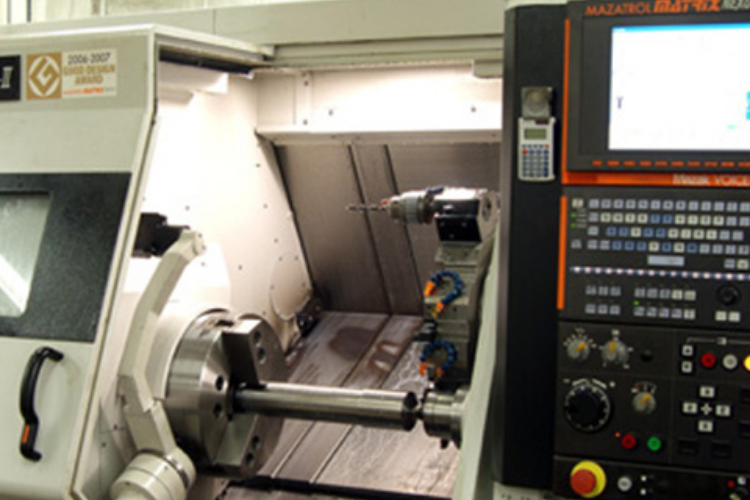
Eight CNC Mazak turning centers to support gear blanks across a range of diameters and lengths
- Controlled blank geometry for downstream gear cutting and finishing
- Multiple large capacity vertical turning centers for repeatability across low-volume and production work
Milling
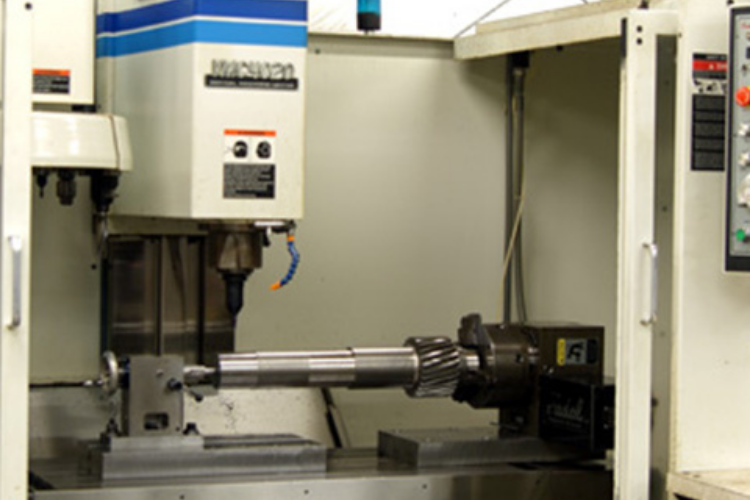
- CNC milling used for keyways, bolt patterns, and mounting features
- Supports secondary machining required for gear integration
- Maintains dimensional accuracy for assembly and alignment
Hobbing
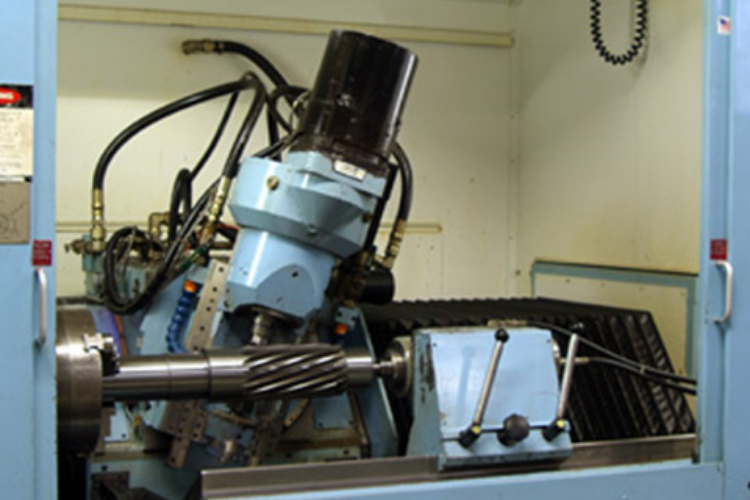
Gear shaping machines for internal and external gears. Supports complex geometries not suited for hobbing
Gear hobbing for spur and helical gears across multiple pitch range
Equipment includes large-format manual hobbers such as Phauter and G&E machines.
Shaping
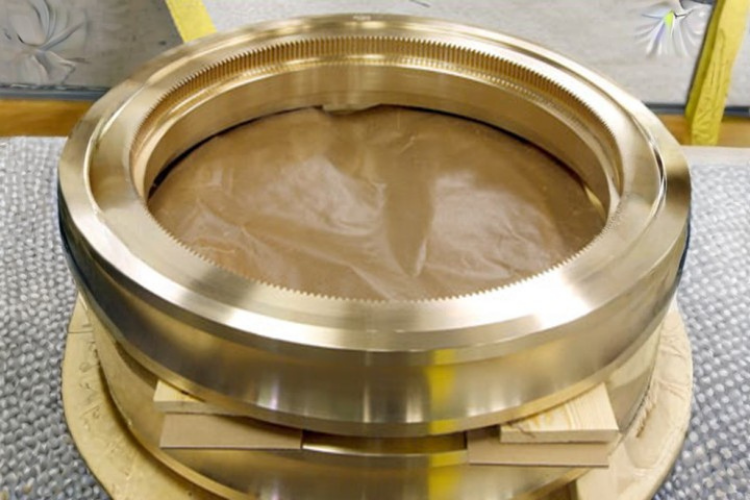
Fellows gear shapers, including 36-inch machines with extended stroke and riser capacity
Supports internal and external gear profiles
CNC Fellows FS400-125 Hydrostroke shapers added for higher-quantity production
Precision Grinding
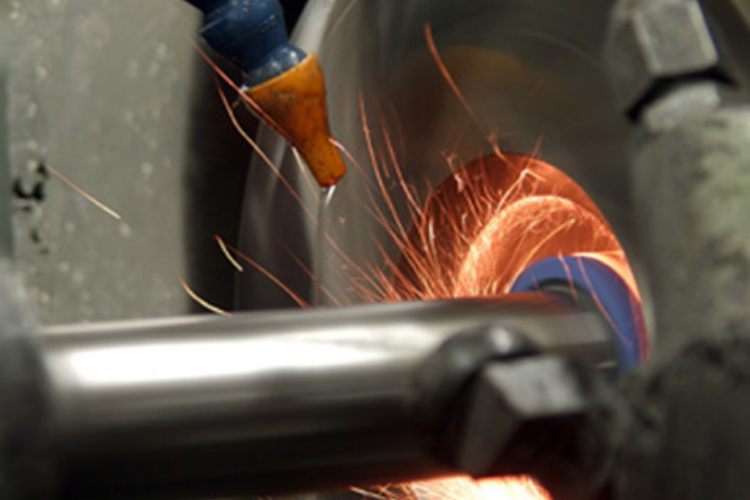
OD, ID, cylindrical, and surface grinding performed in-house
Precision grinding capability has been maintained internally since the late 1960s
Used to control blank geometry and surface quality prior to final gear grinding
Gear Grinding
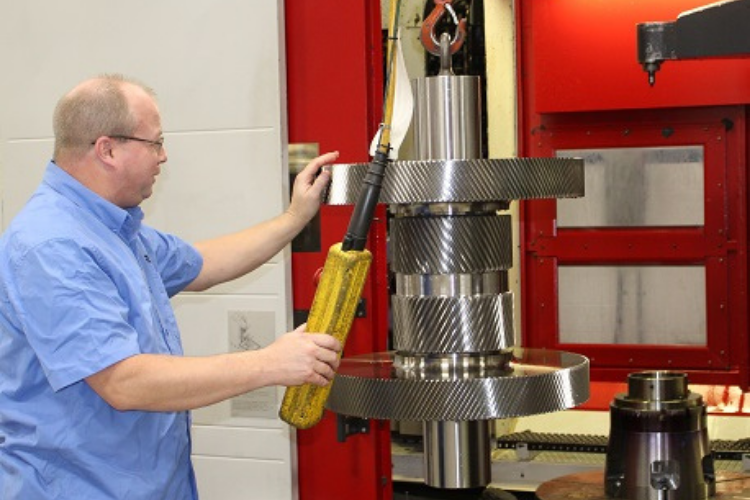
Dedicated Gear Grinding Center
HÖFLER gear grinders equipped with on-board checking
Capable of grinding large-diameter gears
Operates extended hours to support throughput and emergency work
Supports AGMA Q15, DIN 2, and AGMA A2 quality requirements
EDM
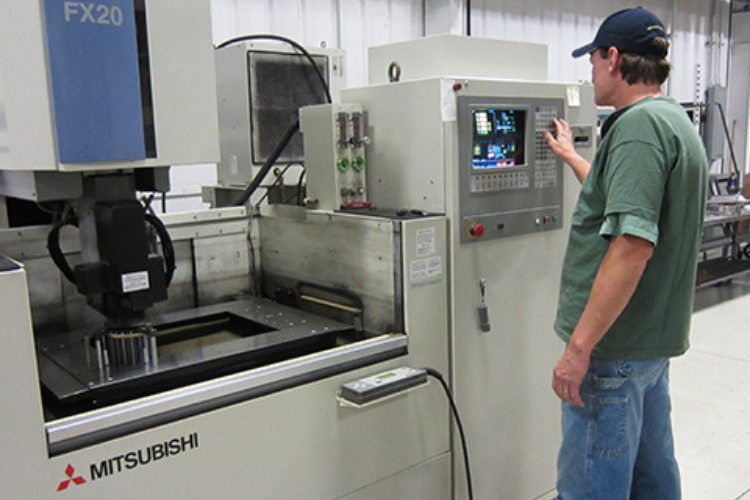
EDM machining for internal features, splines, and keyways
Supports tight-tolerance geometries and complex profiles
Used where conventional machining is not feasible
Used where traditional broaching or pulling methods are not suitable
Supports internal spline profiles and tight-tolerance features
What We Manufacture
Our custom spline and gear manufacturing supports a range of gear types and precision-machined components used in industrial drive systems and power transmission applications.
Parts are produced from drawings, CAD models, or physical samples, with attention to geometry, tolerances, and operating conditions.
This includes both new gear production, splines and replacement components for equipment already in service. Gear types are manufactured based on required tooth form, pitch, pressure angle, and load requirements, along with any material and heat treatment specifications needed for performance.
Gear Types and Components Produced Include:
Components are produced to match existing systems or new application requirements, including gears, splines, shafts, and related components.
| Gear Type | Description | Typical Application |
|---|---|---|
| Spur Gears | Parallel shaft gears with straight tooth profiles | General industrial drives and conveyors |
| Helical Gears | Angled tooth gears for smoother engagement and load sharing | High-speed or high-load drive systems |
| Splines | Internal or external profiles for torque transmission | Shaft connections and coupling interfaces |
| Shafts | Precision-machined shafts with controlled diameters and fits | Gear mounting and rotational systems |
| Replacement Gears | Duplicate gears built to match existing geometry and fit | Maintenance, repair, and legacy equipment |
| Specialty Components | Custom-machined parts with non-standard geometry or features | Application-specific or engineered systems |
Material Inventory and Availability
We maintain a broad on-site inventory of steel to support fast production starts and dependable lead times. Keeping materials in-house eliminates delays from external sourcing and allows work to begin quickly once an order is released.
Stocked materials include hardening alloys and carburizing grades commonly used in gear manufacturing, such as 4140, 4150, 4340, 8620, and 4320. A wide range of bar sizes is available to support both standard production and emergency replacement needs.
Material selection is reviewed based on application requirements, load conditions, and operating environment, including any requirements for heat treatment, hardness, or surface finishing.
Materials commonly used include:
• Carbon and alloy steels for general applications
• Stainless steel options for corrosion resistance
• Carburizing grades for wear resistance and surface hardness
• Materials selected based on load, environment, and performance
• Heat treatment and hardness requirements supported

Precision, Inspection, and Quality Control
Inspection is integrated throughout Riverside’s manufacturing process and finalized prior to shipment or assembly. Verification focuses on critical-to-quality features to ensure each part meets customer specifications.
Inspection capabilities include on-board gear checking, off-line gear checkers, precision centers, profilometers, Rockwell hardness testing, granite inspection plates, and a wide range of calibrated measuring tools. Inspection results are recorded and retained, with certifications available upon request.
This process supports tight tolerance requirements, including AGMA and DIN standards, and ensures consistency across custom and replacement components.

Inspection capabilities include the following methods used to validate dimensions, tolerances, and material properties:
Inspection and Measurement
Inspection and Measurement
Inspection is performed throughout the manufacturing process to verify gear dimensions, geometry, and overall part accuracy. Measurements are taken at defined stages to confirm critical tolerances, including bore size, outside diameter, and gear blank geometry before moving to the next operation.
This process supports consistency across one-off components, low-volume production, and repeat gear manufacturing
CMM Inspection
CMM Inspection
Coordinate measuring machines (CMM) are used to verify critical dimensions and complex gear geometries. This includes validation of bore alignment, concentricity, and positional tolerances that cannot be reliably measured with manual tools.
CMM inspection supports both custom gear manufacturing and reverse engineered components where dimensional accuracy is required.
Gear Tooth Inspection
Gear Tooth Inspection
Gear tooth inspection focuses on verifying tooth profile, pitch, spacing, and alignment. This ensures proper gear meshing, load distribution, and contact patterns during operation.
This step is critical for replacement gears that must match existing components already in service.
Hardness Testing
Hardness Testing
Hardness testing is used to confirm that gear materials meet required specifications after heat treatment. This includes verifying surface hardness and core hardness to ensure proper wear resistance and load capacity.
Material properties are validated as part of the overall quality control process.
Final Inspection
Final Inspection
Final inspection is completed prior to shipment to confirm that all dimensional, material, and tolerance requirements have been met. Each gear is reviewed to ensure it is ready for installation and operation.
For replacement components, this includes verifying fit, alignment, and functional compatibility with existing equipment.
Gear Assembly Services
Gear assembly is performed with a focus on fit, alignment, and functional performance across mating components. This includes assembly of gears on shafts and shaft pinions to improve accuracy and reduce downstream handling.
Gear Assembly Capabilities Include:

Gear assembly is performed with a focus on fit, alignment, and functional performance across mating components. This includes assembly of gears on shafts and shaft pinions to improve accuracy and reduce downstream handling.
Controlled shrink-fit processes are used where required, including heat-based expansion and shaft cooling. Shrink-fit assembly is supported up to .002 inches per inch of shaft diameter, allowing for secure, repeatable fits under load.
Assembly is completed prior to final tooth grinding to ensure proper alignment of the pitch diameter to the shaft axis. This helps reduce runout, gear wobble, and orientation issues that can impact performance in service.
For replacement applications, assemblies are matched to existing equipment to maintain alignment and compatibility without requiring modification during installation. This includes support for spline manufacturing and repair to ensure proper interface alignment.
Each assembly is checked prior to shipment to confirm proper fit, alignment, and readiness for installation.
Emergency Gear Replacement

Emergency gear replacement is focused on restoring operation when critical gear components fail in service. This includes manufacturing replacement gears for industrial equipment from damaged parts, worn components, or limited documentation where original drawings are unavailable.
Reverse engineering is used to capture gear geometry, including tooth profile, diametral pitch or module, pressure angle, and critical dimensions required to match existing mating gears. This ensures proper gear mesh, contact pattern, and load distribution within the drive system.
Material selection, heat treatment, and hardness requirements are evaluated based on the original application to maintain performance under load and operating conditions. Replacement gears are manufactured to specified tolerances, including AGMA quality levels where required for industrial gear applications.
Production is prioritized for time-sensitive failures, with a focus on delivering a functional replacement gear that can be installed without rework and return equipment to service.
Emergency Replacement Capabilities Include
Reverse Engineering and Obsolete Gear Replacement
Parts are evaluated to capture tooth geometry, diametral pitch or module, pressure angle, and critical dimensions required to match the existing gear set. Bore size, keyways or splines, and shaft interface conditions are measured to ensure proper fit and alignment in service.
Existing components are analyzed for wear patterns, contact conditions, and load distribution to understand how the gears in the gearmotor or speed reducer was performing under operating conditions. This is used to confirm geometry and identify any adjustments needed to maintain performance.
Material grade, heat treatment, and hardness are reviewed based on the application. Replacement gears are manufactured to match original specifications or updated where required to address wear, loading, or service conditions.
Dimensional verification is performed throughout reconstruction to confirm geometry, tolerances, and alignment prior to production.
Captured Geometry and Critical Features
- Measurement and reconstruction of tooth geometry, pitch, and pressure angle
- Identification of bore dimensions, keyways, splines, and shaft interfaces
- Analysis of wear patterns, contact conditions, and load distribution
- Material and heat treatment selection based on application requirements
- Recreation of components to match existing gear sets and mating parts
- Manufacturing to specified tolerances and AGMA quality levels
Typical Use Cases
Worn gears that no longer meet tolerance or performance requirements
Broken or failed components with no available replacement
Units that require industrial gearbox repair or replacement
Obsolete gears for legacy or unsupported equipment
Incomplete or missing drawings
Duplicate parts required from existing components